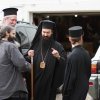

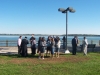
• Theophania 2012 Celebrated at Battery Park, NYC
    On January 6/19, 2012, His Eminence, Metropolitan Pavlos of America, celebrated the Feast of Theophany at the Hudson River
  • St Basil Luncheon 2012
    On January 1/14, 2012, the Cathedral of St Markella held a luncheon in honor of the Feast of St Basil the Great
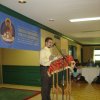
  • Orthodox Conference Held in Toronto
    Orthodox Conference Held in Toronto
    Five hierarchs and nine presbyters participated over the weekend of October 7-10 (n.s.)
  • Bishops Visit St. John the Forerunner Parish
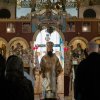
    Bishops Visit St. John the Forerunner Parish
    Metropolitan Chrysostomos of Attica and Bishop Photios of Marathon Served on October 3/16, 2011

Daily Calendar

Print Calendar

English
Greek

About the Period

Preparation is an essential part of Orthodox spirituality. It is for this reason that the Church has established that each major Feast Day be preceded by a period of fasting and spiritual preparation. The greatest feast in Christendom is the Resurrection of Christ, Great and Holy Pascha. It is called the Feast of feasts and Festival of festivals. Since it is the greatest of feasts, therefore the period of preparation for Pascha is the most intense. The period of ten weeks which lead to Holy Pascha is contained in a book called the Triodion. The Triodion can be divided into three different sections; the first, commonly called the Triodion, consists of four Sundays:

  1. the Publican and the Pharisee
  2. the Prodigal Son
  3. the Second Coming and
  4. the Expulsion of Adam from Paradise.

These commemorations remind us of the message of repentance which we have just heard from St. John the Forerunner and later from Christ Himself: “Repent, for the Kingdom of Heaven is at hand.” The parable of the Publican and the Pharisee teaches us that true repentance cannot accompany arrogance and judgmentalism and that “whosoever exalteth himself shall be abased; and he that humbleth himself shall be exalted.”

In the parable of the Prodigal Son, we are taught that we have freewill, the inheritance we have received from the Father. We may squander it on loose living or we may remain close to the Father. When we decide to return to God in a contrite heart and desire only to be a servant of God and not even a son, which is our birthright, we must lift ourselves up from the mire of sin and set out on the road to return to the Father. Then, while we are still afar off, God will run out to meet us and embrace us and kiss us, then will He kill for us the fatted calf. On the other hand, those who have not fallen so far away must not begrudge our repentant brethren nor God for receiving them joyfully.

After these two Sundays the message becomes more severe. Having been taught that God is merciful, lest we take advantage of His mercy, we are reminded of the coming judgment and the eternal fate of sinners. He calls all men His brethren and requires that we also treat them thus saying: “Inasmuch as ye have done good or evil unto one of the least of these my brethren, ye have done it unto me” (c.f. Matt. 35: 41-45). This day is called Meat-fare Sunday because it is the last day on which we are permitted to eat meat until the great day of Pascha. During the week which follows, which is called Cheese-fare week, we are permitted to eat of all foods, save meat: dairy products, fish, wine, and oil, even of Wednesday and Friday. Also, during Cheese-fare week, the services gradually begin to take on a Lenten character; on Wednesday and Friday of this week the Divine Liturgy is not celebrated and “Alleluia” is chanted during Matins instead of “God is the Lord.” In this way the Church begins to prepare us for the Great Fast, on the one hand comforting us with the consumption of all foods, save meat, and on the other hand transforming the services into Lenten ones.

On Cheese-fare Sunday, the last day before the Great Fast, we remember the expulsion of Adam from Paradise. The two themes of repentance and fasting are united in this day’s hymnography, for the first commandment God gave to Adam and Eve was to fast from the fruit of the tree of the knowledge of good and evil. Having violated this commandment, and being cast out of Paradise, Adam sat opposite Paradise and wept. For it is only through fasting and repentance that we may attain Paradise.

On the following day, Clean Monday, the stadium of the virtues is opened, the Great Fast. Let those who wish to enter, gird themselves for the good struggle of the Fast. For those who lawfully compete shall be justly crowned.

So be it, through the prayers of our holy fathers. Amen.

Schools

Hellenic School of St. Markella
22-68 26 St.
Astoria, New York 11105
Contact: Sister Theodouli
(718) 274-5579
Grades K – 6 meet Monday – Friday, 3:30-5:00, on most public school days.
Transportation is available.
Pre-school meets Tuesday – Friday, 12:00-1:30.

Hellenic School of St. Isidoros
Bethpage, Long Island, New York
Contact: Sister Theodouli
(718) 274-5579
Grades K – 6 meet Saturdays.


The Hellenic School of Saint Markella was founded by Bishop Petros, of blessed memory, in the early 1950’s. In 1958, Father Niphon, of blessed memory, sent his spiritual daughter, the nun Siglitiki, to New York to assist with the school. In 2004, Gerontissa Siglitiki was honored by The Greek National Herald as teacher of the year for her many years of service to the Greek community.

By 1974, the Greek Orthodox Church and School of Saint Isidoros had also been founded.

Both Greek schools continue to be operated by the Sisters of Saint Syncletike, under the direction of Gerontissa Siglitiki.

Instruction includes Greek language, history, literature and geography. Greek dance lessons are also offered.

Students may continue past the 6th grade to prepare for the Greek regents examinations.

Encyclical Regarding Holy Communion

December 5/18, 2002

ENCYCLICAL

To the Holy Clergy and Pious People of the Holy Metropolis of the Genuine Greek Orthodox Old Calendar Church of America

Beloved Fathers and Brethren:

“May the blessings of God always be with you.”

1.The beloved Disciple of our Lord, the Evangelist St. John, writes in his First General Epistle: “Little children, it is the last time: and as ye have heard the antichrist shall come, even now there are many antichrists; whereby we know that it is the last time. They went out from us, but they were not of us for if they had been of us, they would no doubt have continued with us: but they went out that they might be made manifest that they were not all of us.” (I John 2:18-19).

Read more | Ελληνικά

About the Metropolis

The Holy Metropolis of the Genuine Greek Orthodox Church (GOC) of America was founded by Metropolitan Petros (Astyfides) in 1954. Its current hierarch is Metropolitan Pavlos, who is a member of the Holy Synod of the GOC of Greece, under the Presidency of His Beatitude Archbishop Kallinikos of Athens and All Greece. We follow the Patristic (Julian) Calendar and resist the heresy of ecumenism.

Orthodox Awareness

Bartholomew Prays at Iftar

Iftar, refers to the evening meal when Muslims break their fast during the Islamic month of Ramadan. Iftar is one of the religious observances of Ramadan and is often done as a community, with people gathering to break their fast together. Iftar is done right after sunset.

We report the following unchanged as it was published:

"The leaders of the Armenian, Roman, Jewish and Syrian communities of Turkey sat around the fasting Iftar dinner in the Beyoglu district of Istanbul."

Community leaders met in Mevlevihane (Tekes Mevlevi) of Galata and proclaimed an encouraging message of unity.

Read more...
Missions

Holy Mother of God, Charlottesville, Virginia

Maria never thought she would start a Church. However, God creates circumstances which cause people to do things they never planned to do. She had family members that were Old Calendarists and she had even attended services at St. Markella’s Cathedral many years ago. But that all became a memory, as life’s changes brought her to her own marriage, raising children, and living in diverse locations.Charlottesville, Virginia became her and her husband's home a few years ago. They settled in to the comfortable routine of worshiping in the local New Calendar parish.

Read more...
Youth

When:
Labor Day Weekend (Sept. 2-5, 2011)

Where:
Clearwater, Florida

Host:
Dormition of the Theotokos Greek Orthodox Church

Registration Form | More Info

Ask A Priest

Why do we Call Angels “Saint”?

Q. I noticed that we call the angels Michael and Gabriel "Saint." I thought the title "Saint" was only given to humans who have proven themselves Godly. Do you mind clarifying this for me? Is there a deeper meaning to "Saint" that I am not aware of?

-S.L. Read more...